Department of Science and Humanities

Science and Humanities

The Department of Science and Humanities at Stella Mary's College of Engineering, Kanyakumari, builds the academic foundation for engineering education through Mathematics, Physics, Chemistry, English and communication skills while developing scientific reasoning, analytical thinking, problem-solving ability and professional competence.

Department of Science and Humanities at Stella Mary's College of Engineering, Kanyakumari
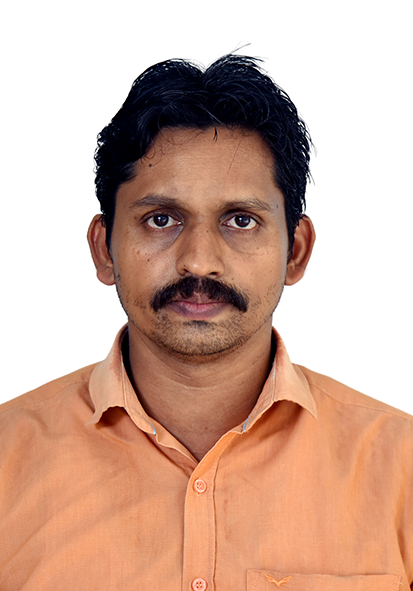
Head of the Department
Budding Engineers
540 Students
Academic Foundation
Mathematics • Physics • Chemistry • English
Established
2013
Vision & Mission

Building a strong academic foundation for engineering education through science, mathematics, communication and analytical thinking.

Vision

  • To contribute to high-quality engineering and management education by strengthening students' foundations in Science, Mathematics and Humanities.
  • To develop analytical ability, communication competence, scientific reasoning and professional skills among students.
  • To support faculty development and maintain strong academic and teaching standards.
  • To encourage analytical thinking, independent judgement, scientific curiosity and lifelong learning.
  • To promote research, innovation and academic collaboration.

Mission

  • To impart engineering fundamentals by providing strong foundations in Basic Sciences and Mathematics.
  • To strengthen students' reading, listening, speaking, writing and professional communication skills.
  • To promote an innovative culture, scientific temperament and problem-solving ability among students.

Science and Humanities Teaching Faculty

Faculty members supporting Mathematics, Physics, Chemistry, English and foundational engineering education.


Non-Teaching Staff

Technical and administrative personnel supporting the Department of Science and Humanities and its laboratories.

Science and Humanities Laboratories

Experimental facilities supporting foundational learning in Engineering Physics and Engineering Chemistry.

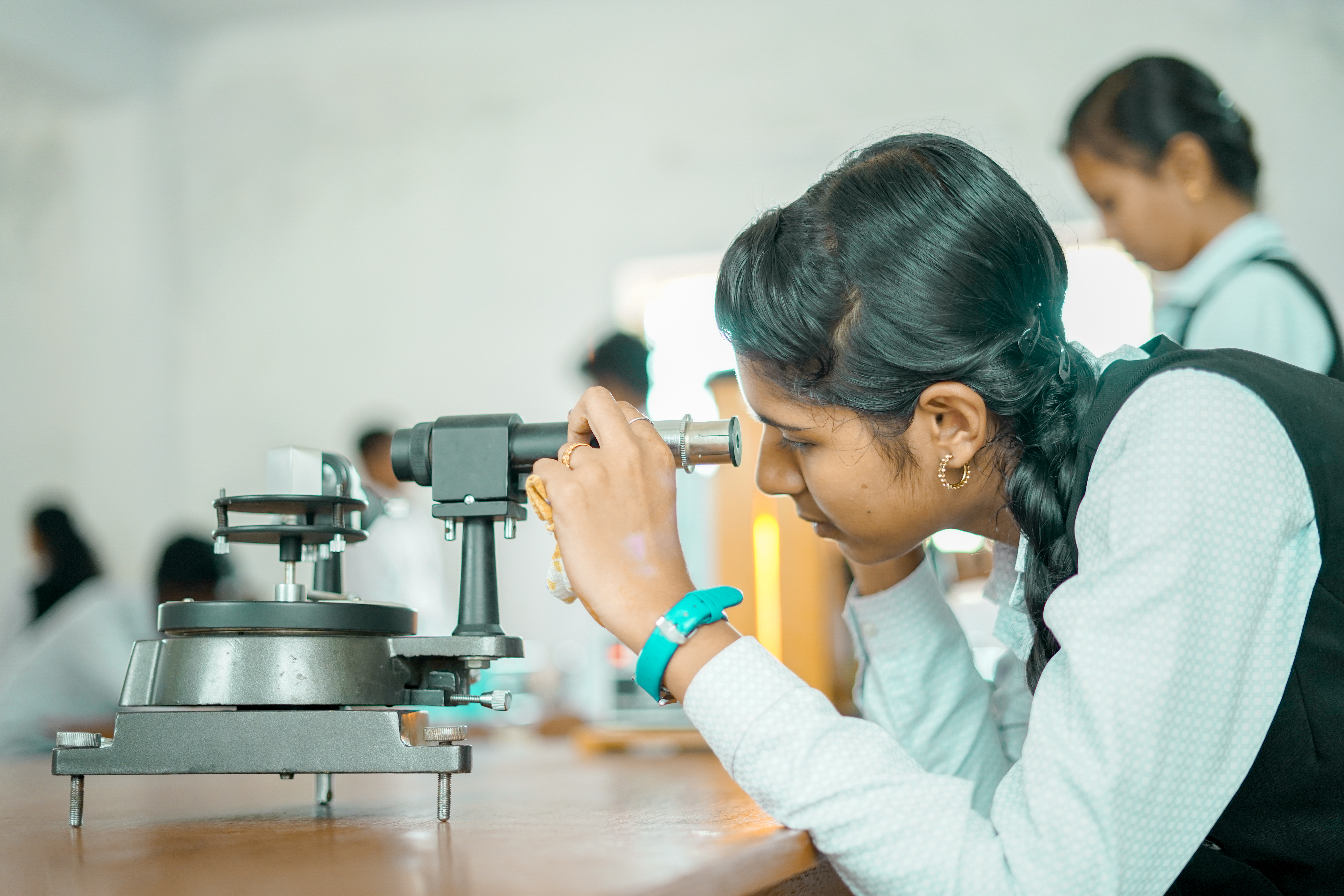
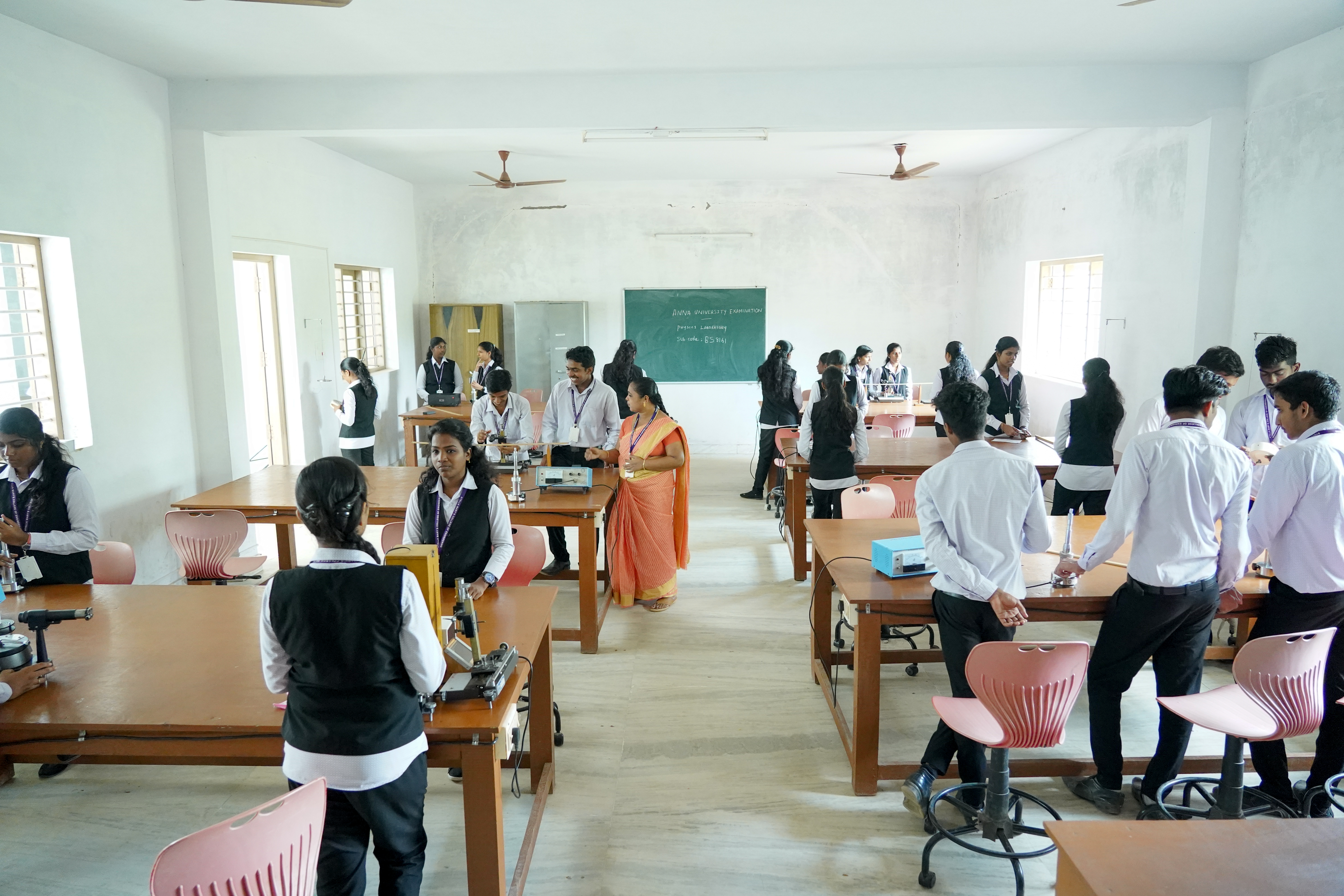
The Engineering Physics Laboratory enables students to verify fundamental scientific principles through experimentation and develop observation, measurement, analytical reasoning, precision and interpretation skills.

Major Experiments
  • Torsional pendulum – determination of rigidity modulus and moment of inertia.
  • Simple harmonic oscillation of a cantilever.
  • Non-uniform bending – determination of Young's modulus.
  • Uniform bending – determination of Young's modulus.
  • Laser – determination of wavelength using a grating.
  • Air wedge – determination of thickness of a thin sheet or wire.
  • Optical fibre – numerical aperture and acceptance angle.
  • Compact disc – determination of groove width using laser.
  • Acoustic grating – determination of velocity of ultrasonic waves in liquids.
  • Ultrasonic interferometer.
  • Determination of semiconductor band gap.
  • Photoelectric effect.
  • Michelson interferometer.
  • Melde's string experiment.
  • Lattice dynamics experiments.
Physics Laboratory photograph: replace this notice with the actual Science & Humanities Physics Laboratory image when the correct departmental photograph is available.

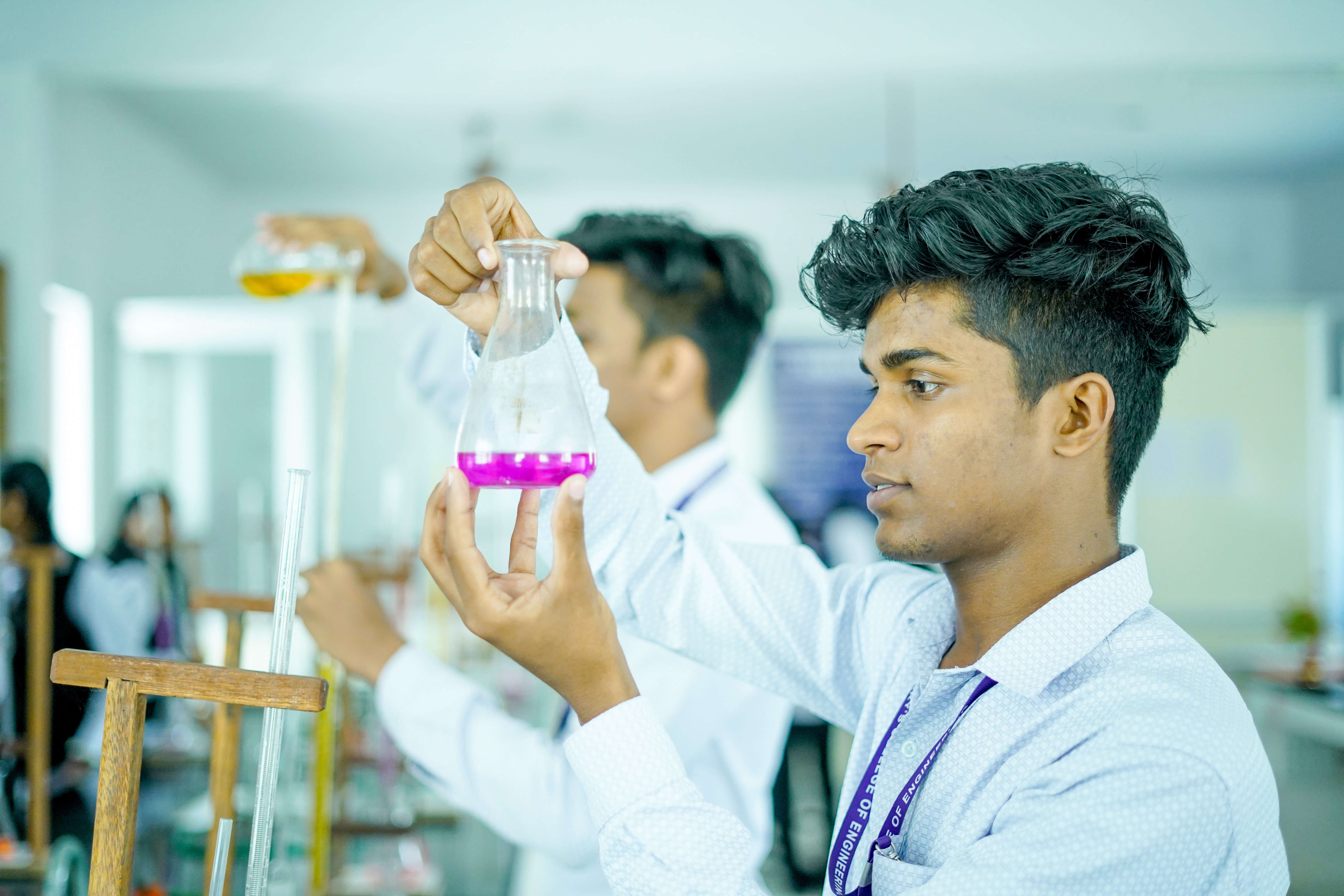
The Engineering Chemistry Laboratory provides students with practical exposure to analytical chemistry, water-quality analysis, electrochemical measurements, engineering materials and preparation of functional materials.

Major Experiments
  • Preparation of sodium carbonate as a primary standard and estimation of water acidity.
  • Determination of alkalinity in water.
  • Determination of total, temporary and permanent hardness using EDTA.
  • Determination of dissolved oxygen by Winkler's method.
  • Determination of chloride by Argentometric method.
  • Estimation of copper by Iodometry.
  • Estimation of total dissolved solids by gravimetry.
  • Determination of hydrochloric acid strength using a pH meter.
  • Conductometric determination of acids in a mixture.
  • Conductometric titration of barium chloride against sodium sulphate.
  • Estimation of iron using a potentiometer.
  • Preparation of TiO₂, ZnO and CuO nanoparticles using the Sol-Gel method.
  • Estimation of nickel in steel.
  • Proximate analysis of coal.
Chemistry Laboratory photograph: replace this notice with the actual Science & Humanities Chemistry Laboratory image when the correct departmental photograph is available.

Board of Studies

Academic experts and faculty involved in curriculum review and development for Science and Humanities courses.

Board of Studies information is being updated.

Science and Humanities Syllabus

Curriculum and foundational courses supporting undergraduate engineering programmes.

Engineering Programme Outcomes

Graduate attributes supported by foundational courses in Science, Mathematics, Humanities and communication.

Programme Outcomes (POs)

  • PO1 – Engineering Knowledge: Apply mathematics, science, engineering fundamentals and engineering specialisation to complex engineering problems.
  • PO2 – Problem Analysis: Identify, formulate and analyse complex engineering problems using mathematics, natural sciences and engineering principles.
  • PO3 – Design / Development of Solutions: Design engineering solutions considering public health, safety, societal and environmental requirements.
  • PO4 – Conduct Investigations: Use research-based knowledge, experimentation, analysis and interpretation.
  • PO5 – Modern Tool Usage: Select and apply appropriate techniques, resources and modern engineering and IT tools.
  • PO6 – Engineer and Society: Apply contextual knowledge to societal, health, safety, legal and cultural issues.
  • PO7 – Environment and Sustainability: Understand engineering impacts and the importance of sustainable development.
  • PO8 – Ethics: Apply ethical principles and professional responsibility.
  • PO9 – Individual and Team Work: Function effectively individually and in diverse multidisciplinary teams.
  • PO10 – Communication: Communicate effectively in professional engineering contexts.
  • PO11 – Project Management and Finance: Apply engineering and management principles in multidisciplinary environments.
  • PO12 – Life-long Learning: Develop the ability for independent and continuous learning.

Academic Calendar

Semester schedules and important academic milestones for Science and Humanities students.

2023–24 Even Semester Science and Humanities Academic Calendar
2023–24 Odd Semester Science and Humanities Academic Calendar
2022–23 Even Semester Science and Humanities Academic Calendar
2022–23 Odd Semester Science and Humanities Academic Calendar
2021–22 Even Semester Science and Humanities Academic Calendar
2021–22 Odd Semester Science and Humanities Academic Calendar
2020–21 Even Semester Science and Humanities Academic Calendar
2020–21 Odd Semester Science and Humanities Academic Calendar
2019–20 Even Semester Science and Humanities Academic Calendar
2019–20 Odd Semester Science and Humanities Academic Calendar

Science and Humanities Newsletter

Department activities, academic programmes, student engagement and achievements.

Science and Humanities Gallery

Highlights of academic programmes, student activities, laboratory sessions and departmental events.

About Science and Humanities at Stella Mary's College of Engineering

Quick answers about the department and its role in engineering education.

What is the Department of Science and Humanities?

The Department of Science and Humanities is the foundational academic department that supports engineering students through Mathematics, Physics, Chemistry, English, communication and related basic science courses.

When was the Science and Humanities Department established?

The Department of Science and Humanities has functioned at Stella Mary's College of Engineering since the institution's inception in 2013.

Who is the Head of the Science and Humanities Department?

The Department of Science and Humanities is headed by Mr. S. Ravi Kumar.

What subjects are handled by Science and Humanities?

The department primarily supports engineering students through Mathematics, Physics, Chemistry, English, communication skills and other foundational academic courses.

Why are Science and Humanities important for engineering students?

Mathematics and basic sciences develop the analytical and scientific foundations required for engineering, while English and Humanities help students strengthen communication, professional competence, critical thinking and interpersonal skills.

What laboratory facilities are available?

The department provides Engineering Physics and Engineering Chemistry laboratory learning that helps students understand scientific principles through practical experimentation, measurement, observation and analysis.

Where is Stella Mary's College of Engineering located?

Stella Mary's College of Engineering is located in Kanyakumari district, Tamil Nadu, India.